We provide professional parking lot cleaning services nationwide, handling everything from surface debris to shop-bay and curb-line buildup. Request a quote today.
What Are the Signs Parking Lots Actually Need Cleaning?
The fastest way to tell is to watch for repeat buildup that keeps coming back after the last cleaning, because that means the contaminants are embedding into the surface. If you see any of these patterns, the lot usually needs more than a quick sweep to get traction and drainage back to normal. Start with the ones that show up in the same spots every week or after rain.
- Slippery black tire marks on driving lanes
- Oily sheen spreading across asphalt or concrete
- Standing water pooling in low spots
- Trash and debris lodged in curb cuts
- Green algae growth on shaded edges
Why Do Slippery Black Tire Marks on Driving Lanes Keep Coming Back?
Slippery black tire marks are usually oxidized rubber plus road film ground into the surface, especially where cars brake and turn. Plain sweeping just moves loose grit around, so the embedded film stays and keeps reappearing as traffic reworks it. A proper cleaning process uses mechanical agitation and degreasing chemistry suited for rubber/road film, followed by thorough rinse or recovery so residue doesn’t resettle. If the marks reappear within days, it’s a sign the lot needs more aggressive surface agitation, not just another pass with a broom or pressure wand.
Is an Oily Sheen Spreading Across Asphalt or Concrete a Sign of a Bigger Problem?
Often, yes—an oily sheen means petroleum contamination is present, and it doesn’t get removed by sweeping or light pressure washing. That oil wicks into pores and around aggregate, so it can continue migrating to the surface and attracting more dirt. When you clean, the goal is to lift the oil film with the right type of degreaser and then fully remove the loosened material with rinse or vacuum recovery so it doesn’t redeposit. If the sheen keeps returning in the same lanes, check for leaks from vehicles or a nearby maintenance area, then coordinate cleaning with fixing the source.
What Does Standing Water Pooling in Low Spots Mean for Parking Lot Drainage?
Standing water pooling in low spots usually means the surface profile or drainage pathways aren’t clearing fast enough, and the pavement is holding grime that slows runoff. Cleaning helps because trapped sediment and organics clog the flow lines and make water linger, which then accelerates discoloration and surface wear. For a cleaning visit, crews focus on removing sediment from edges, behind curbs, and around drains so water can move where it should. If water still stands after cleaning and the weather is dry, that points more toward grading or drain maintenance than a simple surface wash.
Why Do Trash and Debris Get Lodged in Curb Cuts Even After You Sweep?
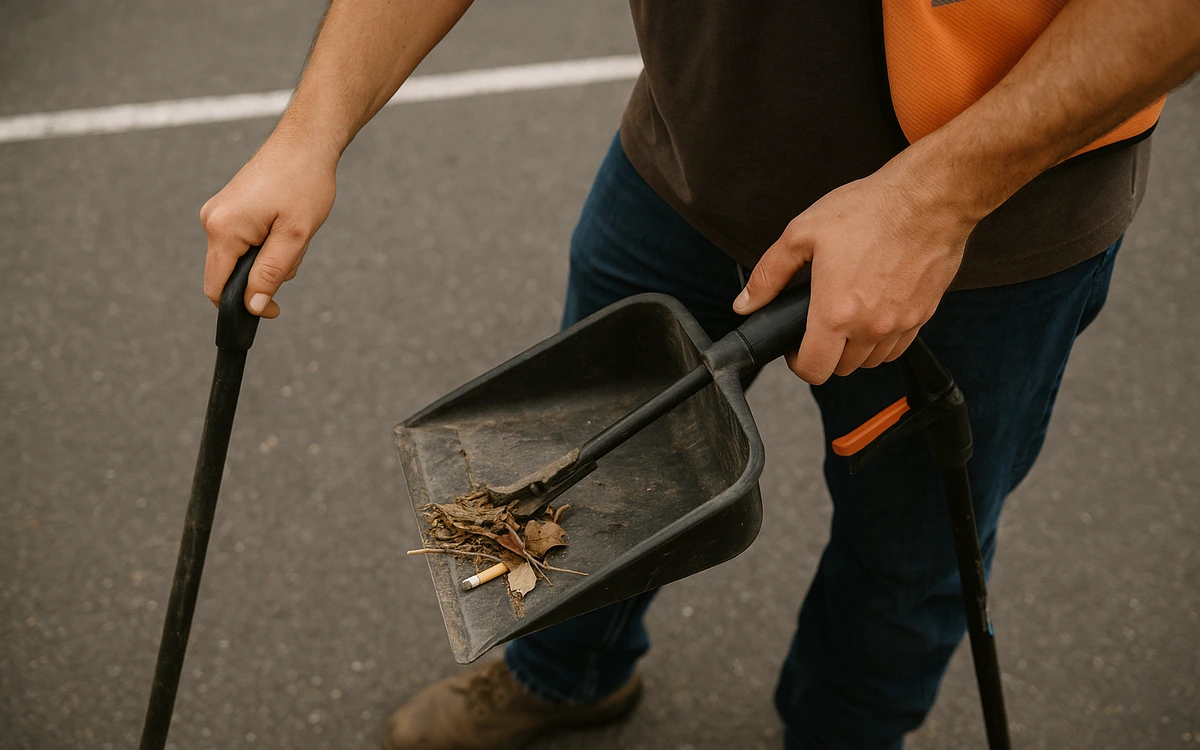
Trash and debris lodge in curb cuts because leaves, paper, and grit catch in the transition where the gutter lip meets the pavement. A broom tends to push material farther into the cut instead of removing it, and loose debris can stay trapped until the next rain. Parking lot cleaning should include targeted extraction of material from curb lines and the immediate gutter channel, often with wet vacuuming or pickup tools that reach into the cut. If you’re finding the same curb areas full again right after cleaning, the crew should adjust technique to avoid pushing debris deeper.
Will Green Algae Growth on Shaded Edges Go Away With a Regular Wash?
Usually not—algae grows where moisture and shade stay on the surface, and it roots into the film layer on pavement. A regular wash may move the top growth but leave enough residue for it to regrow, especially after humid stretches. Proper cleaning targets the growth with a treatment step that’s compatible with the surface, then follows with mechanical scrubbing or agitation and thorough removal so the biological film is lifted. If algae shows up every season in the same shaded corners, plan for repeat treatment timed with the wet periods, not just once a year.
How Much Does Parking Lot Cleaning Cost in Philadelphia, PA?
Parking lot cleaning in Philadelphia, PA typically costs between $445 and $2,178 per year. Pricing depends on the total square footage, how much curb-line and shop-bay buildup requires mechanical extraction, and how often algae or oil sheen calls for repeat treatment. Properties with heavy standing-water residue or clogged drain openings usually fall near the higher end because crews need extra time for sediment removal and additional rinse or recovery passes.